

News 01 — Mechanical & Chemical Textile Recycling: Current Limitations
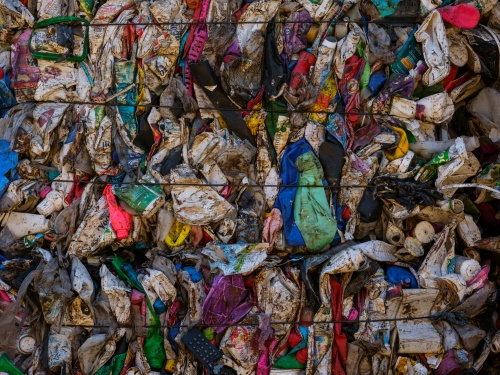
Modern textiles vary significantly in their material composition, structure, and chemical treatment, which creates major challenges for recycling systems. Garments are often made from blends of natural fibers such as cotton or wool combined with synthetics like polyester, elastane, or nylon, frequently in varying ratios even within the same product line. In addition, textiles are dyed using a wide range of dye classes and pigmentation systems, producing different levels of chemical stability and resistance to removal. Beyond coloration, many fabrics are also treated with functional finishes such as water repellents, flame retardants, anti-wrinkle coatings, softeners, and performance enhancers, all of which further alter how materials behave during recycling processes.
Mechanical recycling physically breaks textiles down into fibers through shredding and reprocessing. While widely used, it shortens fiber length and reduces material strength, making outputs more suitable for low-value applications such as insulation or stuffing rather than new textiles. It is also most effective only for single-material fabrics, which are increasingly rare in modern clothing.
Chemical recycling can break polymers down into their chemical building blocks for reformation into new fibers. However, these processes are often energy-intensive, require significant chemical inputs, and are still limited in industrial scalability. Many systems also struggle with blended or heavily treated textiles.
As a result, a large portion of post-consumer textiles remains outside the effective reach of current recycling infrastructure, contributing to continued reliance on landfill, incineration, or downcycling pathways.
Mechanical recycling physically breaks textiles down into fibers through shredding and reprocessing. While widely used, it shortens fiber length and reduces material strength, making outputs more suitable for low-value applications such as insulation or stuffing rather than new textiles. It is also most effective only for single-material fabrics, which are increasingly rare in modern clothing.
Chemical recycling can break polymers down into their chemical building blocks for reformation into new fibers. However, these processes are often energy-intensive, require significant chemical inputs, and are still limited in industrial scalability. Many systems also struggle with blended or heavily treated textiles.
As a result, a large portion of post-consumer textiles remains outside the effective reach of current recycling infrastructure, contributing to continued reliance on landfill, incineration, or downcycling pathways.

News 02 — Biological Recycling: Emerging Approaches to Textile Recovery
Biological recycling is an emerging field exploring the use of biological systems to process and recover value from complex textile waste streams.
Rather than relying on purely mechanical force or high-energy chemical breakdown, biological approaches aim to use controlled biological mechanisms—such as enzymes or engineered biological pathways—to interact with textile materials at a molecular level. This can allow for selective breakdown of specific fiber types while preserving others, particularly in blended fabrics.
In industrial contexts, these biological processes are not applied in open natural environments, but within controlled systems designed to manage conditions such as temperature, pH, and reaction timing. This allows for greater precision and scalability than natural decomposition processes.
While still in development, biological recycling is being explored for its potential to reduce energy input requirements, improve compatibility with mixed-material textiles, and enable higher-value material recovery compared to conventional downcycling approaches.
Rather than relying on purely mechanical force or high-energy chemical breakdown, biological approaches aim to use controlled biological mechanisms—such as enzymes or engineered biological pathways—to interact with textile materials at a molecular level. This can allow for selective breakdown of specific fiber types while preserving others, particularly in blended fabrics.
In industrial contexts, these biological processes are not applied in open natural environments, but within controlled systems designed to manage conditions such as temperature, pH, and reaction timing. This allows for greater precision and scalability than natural decomposition processes.
While still in development, biological recycling is being explored for its potential to reduce energy input requirements, improve compatibility with mixed-material textiles, and enable higher-value material recovery compared to conventional downcycling approaches.

News 03 — EU Textile Waste Regulation: Policy Shifts and Extended Producer Responsibility
The European Union is currently implementing a series of legislative changes aimed at addressing growing textile waste volumes and improving circularity within the sector.
Under the revised Waste Framework Directive, EU member states are required to establish separate collection systems for textile waste. A key component of this framework is the expansion of Extended Producer Responsibility (EPR), which places responsibility on producers for the end-of-life management of textile products they place on the market.
These requirements are being phased in across member states, with full implementation expected by mid-2027, marking a significant shift toward standardized textile collection and financing systems across the EU.
The regulation is expected to increase pressure on the textile industry to develop scalable recycling and recovery solutions, improve material traceability, and reduce reliance on landfill and incineration. It also represents a broader policy shift toward aligning textile production with circular economy objectives at the regulatory level.
Under the revised Waste Framework Directive, EU member states are required to establish separate collection systems for textile waste. A key component of this framework is the expansion of Extended Producer Responsibility (EPR), which places responsibility on producers for the end-of-life management of textile products they place on the market.
These requirements are being phased in across member states, with full implementation expected by mid-2027, marking a significant shift toward standardized textile collection and financing systems across the EU.
The regulation is expected to increase pressure on the textile industry to develop scalable recycling and recovery solutions, improve material traceability, and reduce reliance on landfill and incineration. It also represents a broader policy shift toward aligning textile production with circular economy objectives at the regulatory level.
